A Healing Works Grantee Spotlight
Your patient is back for a follow-up visit, and you’re expecting great things. After all, last time you talked through what’s important to her, decided on some lifestyle changes, and updated her medication. You’re excited to see if the changes have made a difference.
But the numbers are puzzling. You review the test results and see that her problem still isn’t as well controlled as you would expect. Your mind mulls over the possible reasons as you open a conversation. Then it comes out: she can’t afford to pick up the prescription every time, so she’s taking less medication to fit the cost into her budget.
“But … you have insurance!” you think. It turns out that the copay for that medication is $250 a month, and that’s just too much. But if she takes it once a day instead of twice, she can just afford it.
For clinicians, this gap between coverage and access is a familiar frustration. Out-of-pocket costs that patients can’t afford to pay don’t just delay care. They can lead to abandoning treatment, interrupt months of progress or force choices between health care and basic household needs.
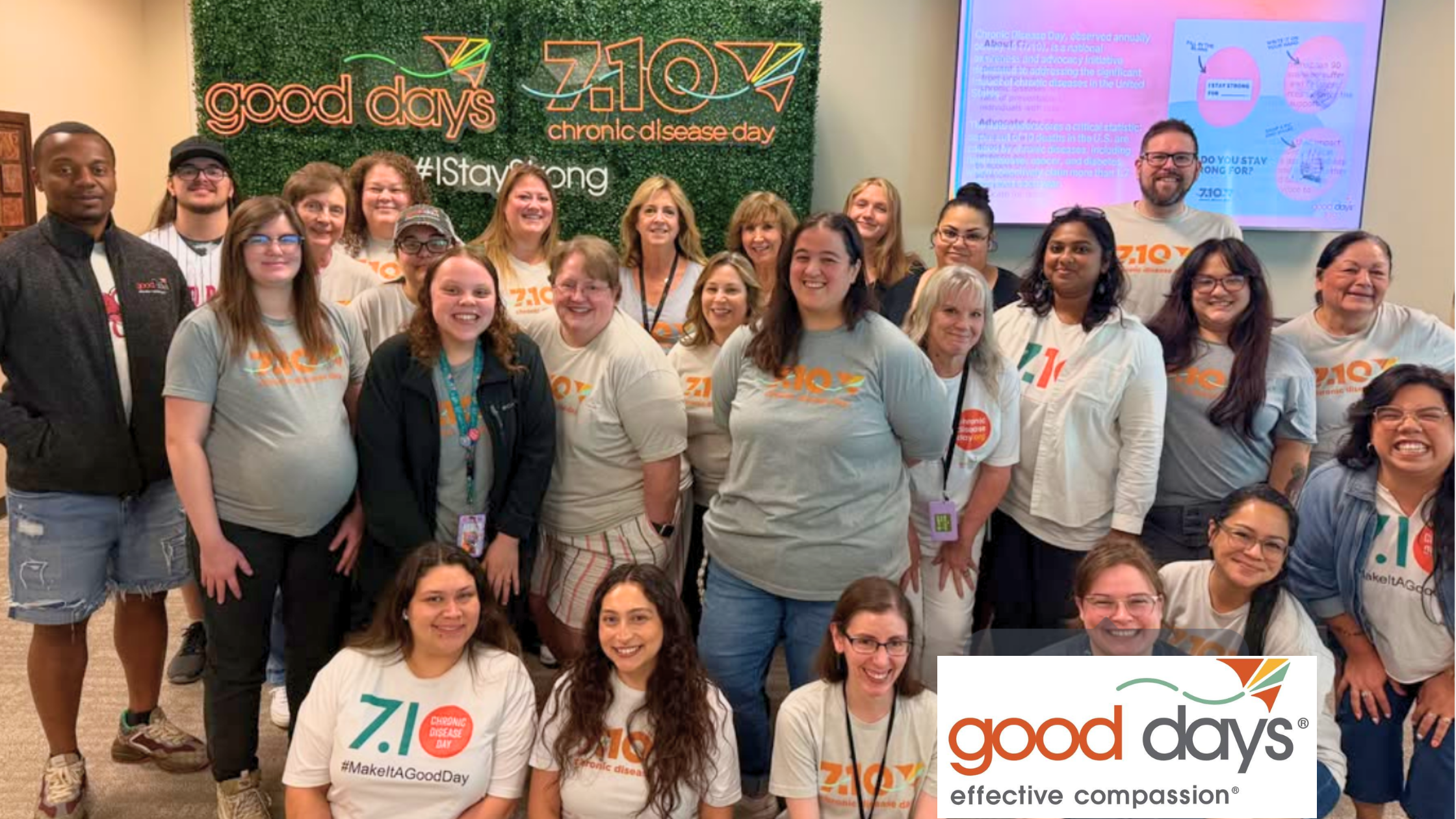
That’s where organizations like Good Days come in. Good Days is a national, independent nonprofit organization whose mission is to help patients access treatment and get the care they need. They provide funds for out-of-pocket costs and connect patients with practical support services. Healing Works Foundation is proud to support their work with “Tools for Taking Care of You,” part of their nationwide Chronic Disease Day campaign. Held on July 10 each year, Chronic Disease Day aims to raise awareness that 7 out of 10 (7/10) of deaths in the United States are due to chronic diseases.
Who Good Days serves
Good Days focuses on people with chronic disease, cancer and other serious or life-altering conditions who have insurance but can’t cover the remaining cost of care. Its mission is to lift the burdens of chronic illness through assistance, advocacy and education, with the goal of improving health and quality of life for patients whose treatment would otherwise be financially out of reach. Treatments must be FDA-approved and provided in the United States.
What Good Days offers
Good Days provides four types of patient support: copay assistance, premium assistance, travel assistance and diagnostic testing assistance. Together, these programs are designed to reduce the practical barriers that keep patients from receiving the care their clinicians recommend.
Copay assistance helps eligible patients pay co-payments and for prescribed treatments, particularly high-cost treatments for chronic or serious disease. The organization operates disease-specific funds. Whether a patient qualifies depends on whether their diagnosis is covered and the specific fund is open when they apply.
Premium assistance supports eligible patients who need help keeping their health insurance. Good Days’ care navigators can help patients understand their insurance options. In some cases, they may be able to support patients who need coverage for the whole family, depending on the circumstances.
Travel assistance addresses another issue your patients may not be telling you about: transportation barriers. Do they still drive? Does their spouse drive? Do they live in a rural or semi-rural area, or need a ride after treatment when they might normally take public transportation?
This type of assistance is especially valuable for patients who need to travel repeatedly for infusions, specialty visits or treatment at regional centers. Good Days can cover local transportation, including rides through Uber Health and Lyft for Healthcare. Flights, rental cars and lodging help are available when medically necessary travel requires overnight stays.
Diagnostic testing assistance helps cover certain tests when insurance does not fully pay for them and those tests are needed to establish a diagnosis or guide treatment decisions. This can reduce delays that could otherwise slow the start of appropriate care.
Aren’t Prescription Drug Prices Lower Now?
Since 2025, the federal government has pursued “most‑favored nation” drug pricing. In February 2026, it launched a national federal drug‑discount website (TrumpRx.gov) that offers discounted cash prices on certain brand‑name drugs.
However, for patients with commercial insurance, the discount site currently serves more as a separate cash‑pay option than a replacement for the pharmacy benefit. Purchases often don’t count towards a patient’s deductible or out‑of‑pocket maximum. In addition, the formulary is still small.
So, while lower pricing can help people taking some specific drugs, many patients still cannot afford the cost of their medications. Good Days’ copay, premium, travel and diagnostic testing assistance remains just as valuable.
Who is eligible?
If you’re interested in connecting a patient with Good Days, the requirements are:
- Household income at or below 500% of the federal poverty level
- Insurance that covers at least 50% of treatment costs
- Patient must have a valid Social Security Number
- Treatment must be provided in the United States
Eligibility also depends on whether the patient’s condition matches a currently covered disease fund. Because funding availability can change over time, Good Days encourages patients and clinicians to check current fund status online or by phone before applying.
Why this matters for you
You may think first of your uninsured patients when you think “Who might have trouble affording this?” But the burden that medical costs put on patients and families, called financial toxicity, isn’t always completely lifted by enrolling in an insurance plan. A $250 monthly copay is a hardship at many income levels, and copays can be much higher than that. The patients most affected aren’t always the ones we suspect might be struggling.
They also may not be the ones who bring it up. After all, they have “good” jobs and insurance. There shouldn’t be a problem, right? They may ration medications or skip visits rather than disclose a gap they feel they should be able to manage.
Asking “Will your insurance cover the cost of this? Do you have a large co-pay?” is one way to screen without making things awkward. Focusing the question on the insurance benefit rather than personal finances makes it feel clinical, not personal. You can suggest patients check with their insurer or, in a situation like a group medical appointment, they may take time to work with a care navigator to check their benefits. When the answer reveals a gap, Good Days may be able to help close it.
This type of support can make the difference between being able to stick with treatment, utilize your referrals and learn more about a condition based on the results of diagnostic testing or clinical care the patient might otherwise skip for financial reasons.
In 2024, Good Days provided more than $485 million in aid to 428,193 people. The average household income of a Good Days grant recipient family is modest, around $42,000. Good Days support is available in all U.S. states and territories, and 96% of funds raised go directly to grant recipients.
How to connect patients with Good Days
If you have a patient who has insurance but is struggling with out-of-pocket treatment costs, connecting them with Good Days is straightforward.
- Check fund availability online. Because fund status can change, checking in real time helps patients and staff avoid frustration.
- Work with Good Days Care Navigators. Care Navigators can help providers and patients understand eligibility, identify relevant programs and decide on next steps.
- Support patient self-referral. Patients can apply for assistance directly through the Good Days website or by phone. Social workers, financial counselors, care navigators and pharmacy or infusion staff can often help guide eligible patients through the process.
- Build Good Days into your financial navigation workflow. Because eligibility is diagnosis-specific and availability can change, checking Good Days as part of your regular workflow can help you and your patients achieve better outcomes more consistently.
A different way forward
It’s important to remember that we don’t always know which patients need financial help. We may think we do, but the patients who benefit most from Good Days are insured. They are often existing patients who have coverage, a diagnosis, a treatment plan – and that financial gap you don’t know about that puts their health at risk.
As a clinician, you aren’t responsible for closing that gap alone. But by offering one more place where patients can find help, you can widen their circle of support. This makes it more likely that they can follow their treatment plan.
Having an organization like Good Days as a resource can also boost your staff’s morale, giving them another way to help patients and families. As one of our Healing Works Foundation grantees, Good Days stands out for addressing a problem we encounter all too often: patients cannot benefit from treatment they can’t afford. That’s a problem worth solving and a resource worth knowing.
Resources
Good Days: www.mygooddays.org
Financial Impact of Cancer Pocket Guide
7 Ways to Address Financial Barriers to Medication Adherence and Contain Costs