Welcome to the latest essay in our “On Healing” series, where Dr. Wayne Jonas explores whole person care and the deeper dimensions of healing.
If you are a clinician, you have had the experience of a patient or a family member breaking down in your exam room. Whether you just shared a difficult diagnosis or someone is struggling to find pain relief or the right medication, we’ve all seen tears, anger, or even outbursts of rage or frustration. When I talked with my colleague Christina Puchalski, MD, MS, founder and director of the George Washington Institute for Spirituality & Health (GWish), she had just witnessed such a moment of suffering with a patient.
As she briefly shared, this was a longtime patient with a chronic condition. The patient was in the exam room with his supportive spouse. As they all talked, the patient’s low-grade irritation with his illness ’washed over his wife, affecting the whole encounter.
Puchalski tried the usual tactics to smooth things over – asking the patient to take a deep breath, trying to reframe some of what he was saying – but nothing seemed to help. The tension didn’t break. This was not going to be fixed with words and suggestions.
Then, she said, she simply started to quiet herself and listen to her intuition. From years with this patient, she knew his faith mattered deeply to him. She asked, “Would you consider just praying right now?”
He did. As he prayed, he expressed thanks for having a caring clinician and a loving spouse. He asked forgiveness for his irritation. In Puchalski’s words, it “transformed the entire moment.” The heat drained out of the room. When her patient finished the prayer, he turned to his partner and apologized. In that moment, Puchalski said, the sacred in the room was palpable to her.
The pause to listen
What struck me most in this short story was not the prayer but what came before it. My colleague had not reasoned her way to prayer. Instead, she said, “I was in the moment, listening to something inside myself.” When we are trying to fix something or someone, we are not connected to our intuition. “It is our intuition that may open us up to a path forward, one that does not rely on a fix,” Puchalski noted.
The capacity to pause is a skill we develop as clinicians. “When we learn to shift from doing to being fully present, something may emerge that can lead us to hear what is really going on with the patient that we might have missed. Puchalski calls it “being aware of the sacred in the room.”
Why does the pause matter so much? Because beneath the surface of every clinical encounter there is a world of emotions, memories, values, and concerns that neither the patient nor the clinician has yet voiced.
You can call that “hidden territory” or “the unconscious,” if you like. Some would call it the spiritual dimension. This is where, in my experience, wisdom emerges. Pausing to just listen is how we make room for wisdom to unfold.
That pause does not guarantee an answer, and it cannot replace the work of clinical assessment. But listening makes room for the as-yet-unspoken concern, the remembered source of strength, or sudden clarity about what matters.
When I speak about whole person care rather than patient-centered care, this is what I mean. A person is always more than a body with its illness or injury in front of you. The person’s social, emotional, mental, and spiritual lives are always present.
Puchalski’s patient had spiritual resources at his fingertips. His clinician had taken the time to learn that about him. So at a difficult moment, she was able to create space for him to use his own resources.
Defining spirituality
I asked Puchalski about the definition of spirituality that she has spent much of her career refining. After two major international consensus conferences, she and her colleagues settled on this: Spirituality is “a dynamic and intrinsic aspect of humanity through which persons seek ultimate meaning, purpose, and transcendence” and “experience relationship to self, family, others, community, society, nature, and the sacred,” through beliefs, values, traditions, and practices.
That is not a short definition, and each word is hard-won. This definition of spirituality applies to anyone, as it refers to our search for meaning and purpose, which is unique for each person. For some this may refer to faith in God. For others, it might be a call to serve or expressed in more secular beliefs and values.
Puchalski’s work involves training clinicians and pairing them with health care chaplains based on the generalist-specialist model of clinical care. The clinicians are the generalist spiritual care providers, and the chaplains are the specialist spiritual care providers. Both work together in services of the patients’ spiritual needs. Spiritual care can dovetail with psychological counseling and group support without competing with it. All clinicians, Puchalski notes, need to have training in spiritual care within their scope of practice.
When suffering transcends itself
I have long been drawn to a definition of healing developed by colleagues of mine, William Phillips and Thomas Egnew: healing as the transcendence of suffering. Suffering happens when illness, loss, or crisis threatens the integrity of who a person believes themselves to be.
I asked Puchalski what transcendence means to her. “It’s how we understand something perhaps greater than us, or this world,” she said, a space where religion or God can reside, or other expressions of the significant or sacred. She simply calls it “the other.”
We can also understand that “something greater” as a larger self that draws on capacities beyond the five senses. Either way, what changes in the moment is the size of the frame. Her patient’s prayer wasn’t a detour from the clinical encounter. It was the encounter itself, touching something bigger than the argument in the room and reframing what the argument was even about.
The art of presence
If transcendence can’t be scheduled, can it at least be practiced? Puchalski thinks so. She has named this skill “presence” – not just being physically in the room with your patient but becoming, for that moment, the best version of yourself for that person.
For almost 20 years, she helped run a retreat in Assisi built around what participants called “The Art of Presence.” This art involves knowing when not to reach for the tissue box the moment a patient starts to cry. It means noticing when something in a story doesn’t sit right, then pausing and following that thread instead of the day’s agenda. “The thing that is silent in the room,” she said, “may be the very most important thing we need to address.”
Presence, as I have come to think about it, is a capacity for a heart-to-heart connection: meeting a patient with compassion and attention, without deciding in advance what their suffering means or what should comfort them. When we make that connection, pause, and listen, the person’s own wisdom has a chance to emerge. We trust that someone who is suffering can find that wisdom if we accompany them.
Some clinicians have a natural capacity for making those heart-to-heart connections. The encouraging news is that it can also be taught. My colleague Ronald Epstein, together with Mick Krasner, has built Mindful Practice in Medicine at the University of Rochester, a training program that cultivates attention, deep listening, and presence. I will say more about this in a future On Healing essay.
Making connections is where the pressures of modern medicine collide hardest with the work of healing. Physicians are trained to fix, and most visits run 15 minutes or less. Puchalski’s answer when trainees mention this is simple. Walk in intending to be fully present and let the visit take as long as it requires. “We have to be there for our patients,” she says.
Pairing clinicians and spiritual care providers
My father was a hospital chaplain, and a military chaplain through three wars before that. My daughter completed a full clinical pastoral education residency after her own medical training. So, the question of where chaplains fit into this work is personal for me.
Puchalski’s answer is a generalist-specialist model. Every clinician is a generalist in spiritual care, capable of taking a spiritual history, noticing distress, and offering the compassionate presence that allowed her patient to turn to prayer.
The chaplain is the specialist, the person a clinician turns to when a need surfaces that requires deeper attention. The GWish interprofessional training programpairs a clinician and a chaplain on every teaching module, and clinicians are encouraged to bring chaplains back to their own institutions.
The model solves a problem Puchalski has seen repeatedly: a clinician screens for spiritual distress, finds it, and doesn’t know what to do next. Paired with a chaplain, that clinician has somewhere to send the findings, and the collaboration itself is the point.
Spiritual care in the everyday
Spiritual care in medicine got its start in palliative and end-of-life care. Puchalski’s own work began there in the 1990s. Her training programs are now run in family medicine clinics, community health centers, and primary care. Whole person cancer care, in the initiative I lead, rests on the same premise: The health-generating power of attending to meaning and connection shouldn’t be reserved for the sickest patients or the last days of life.
That broadening is what I hope the National Academies’ forthcoming consensus study on whole person care will take on. The spiritual dimension of personhood is too often treated as the least visible, most contested part of whole person care. Puchalski was clear that this advances through the same rigor we’d demand of any clinical domain: clear definitions, professional training, and evidence.
What serves best?
Puchalski used a phrase I haven’t been able to put down since: What serves best in this moment? It’s the question she asks herself with every patient, alongside, not in place of, the protocol or checklist. The answer differs for every person and often for the same person from one visit to the next. Sometimes a medication adjustment serves best. Sometimes it’s a referral. And sometimes, as it turns out, it’s a shared prayer no one sees coming.
A mandate or a billing code alone will never reliably produce a moment like that. But we can still work on building a health care system in which there is room for it, one that trains clinicians for the pause before the intervention, pairs generalists with specialists instead of asking everyone to do everything, and treats the search for meaning, purpose, and transcendence as no less real than the search for the right medication for blood pressure or diabetes. That, to me, is what it would mean to finally take the whole person seriously.
For Further Reading
Christina M. Puchalski, A Time for Listening and Caring: Spirituality and the Care of the Chronically Ill and Dying. Oxford University Press, 2006.
Christina M. Puchalski, MD, and Betty Ferrell, PhD, Making Health Care Whole: Integrating Spirituality into Patient Care. Templeton Press, 2011.
Christina M. Puchalski, Robert Vitillo, Sharon K. Hull, and Nancy Reller, “Improving the Spiritual Dimension of Whole Person Care: Reaching National and International Consensus.” Journal of Palliative Medicine. 2014;17(6):642–656. pmc.ncbi.nlm.nih.gov/articles/PMC4038982
The FICA Spiritual History Tool. Developed by Dr. Puchalski and colleagues, FICA offers a practical framework for asking about faith and belief, importance, community, and how clinicians should address these concerns in care.
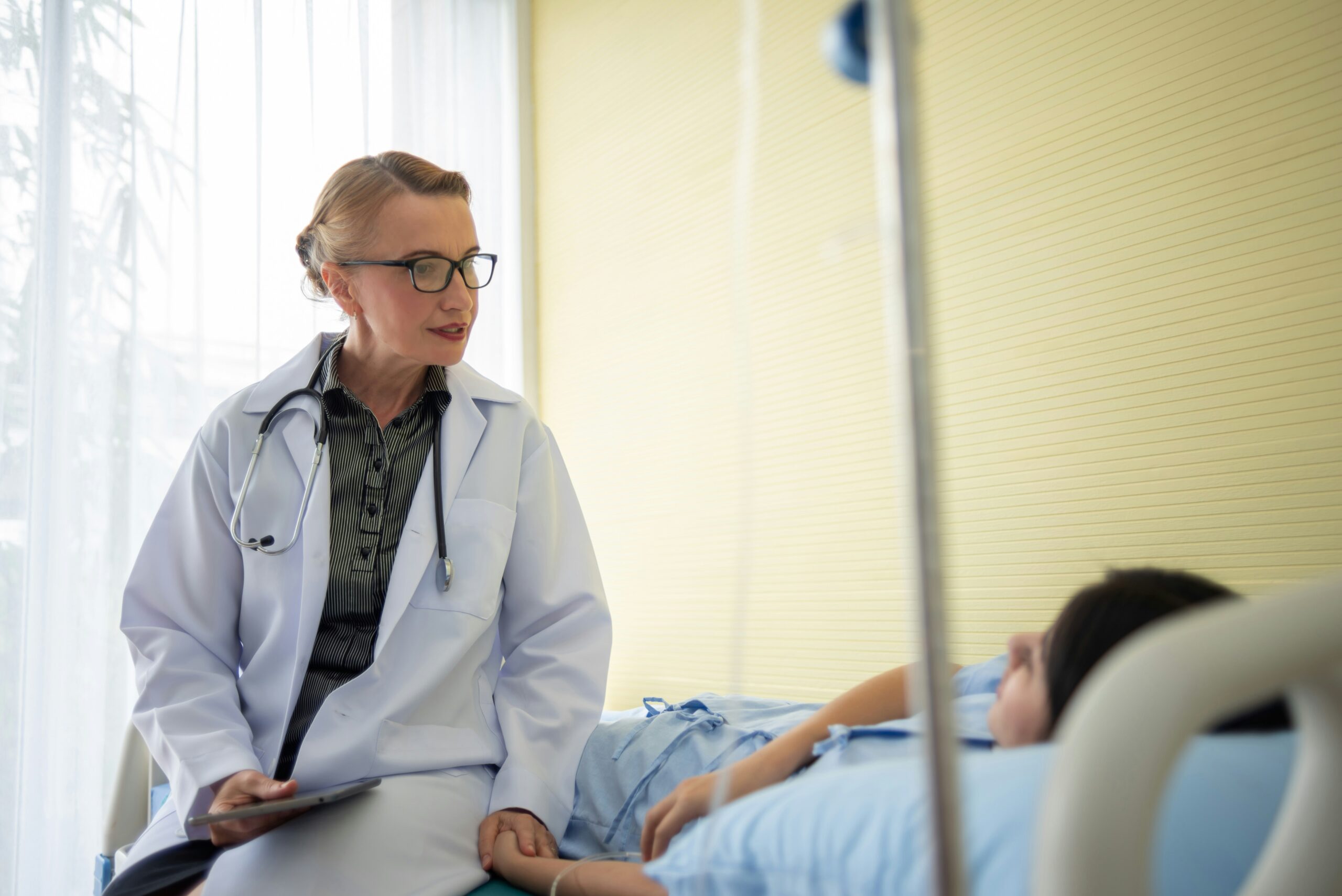
Photo by Getty Images on Unsplash+