On paper, your patient may have everything working in her favor: a diagnosis, a treatment plan focused on whole person health, and insurance. So when your office manager reports that this patient called the office in tears, you think first that symptoms or side effects must be the problem.
In fact, the insurer has denied the prior authorization for her infusion – not once but twice. In the past few weeks, your patient has spent hours on hold with her insurance company. She even took a day off work to file an appeal. Still, she doesn’t know if her next scheduled treatment will be covered. Your patient isn’t asking for a different treatment. She is asking for help getting the one you already prescribed.
While your staff may be able to help untangle an insurance denial or track down a disability form, it’s a challenge they may have little time for. Yet the problems of treatment cost and managing daily life are part of whole person care, and the stress involved in wrangling them can make patients’ symptoms worse. When my patients face challenges like these, an organization like our grantee, Patient Advocate Foundation (PAF), may be able to help.
PAF is a national 501(c)(3) nonprofit that can help patients navigate the complexities of care, get access, and afford the treatments they need. They provide financial assistance for treatment and cost of living needs through their program TotalAssist, personalized case management, and more.
PAF and similar organizations help clinicians make whole person care a reality by addressing the barriers around treating a diagnosis, not just the diagnosis itself.
Who PAF serves
PAF was founded in 1996 by Nancy Davenport-Ennis, along with her husband John “Jack” Ennis. The impetus for creating PAF came from watching a close friend, Cheryl Grimmel, fight breast cancer and her insurance company at the same time.
Cheryl died in December 1994. On the night of her funeral, Nancy and Jack began drafting business plans for two organizations: PAF, to provide direct services, and an advocacy affiliate, National Patient Advocate Foundation, to push for changes in health care delivery.
In its first year, PAF operated out of a 10-by-10-foot office and helped 157 patients. Since then, it has directly helped more than 3.8 million people get access to care or navigate the complexities of their health care. It has disbursed more than $7 billion in financial assistance, and more than 350,000 patients have received case management support. In mid-2026, PAF joined forces with the Patient Access Network (PAN) to broaden its reach.
What PAF offers
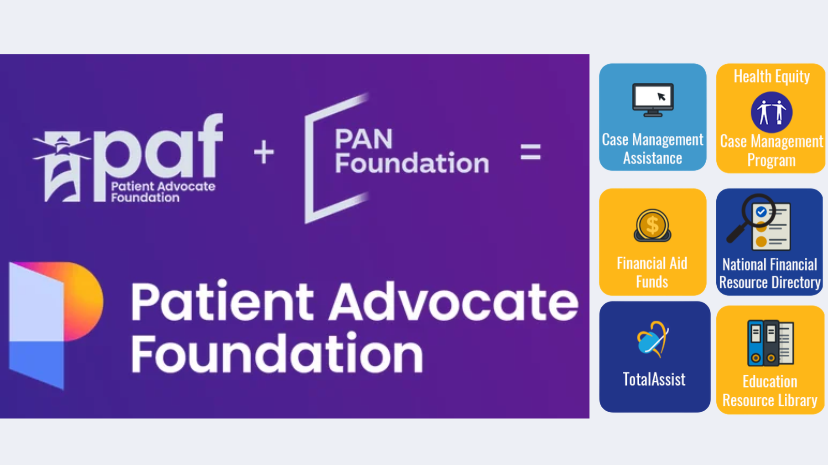
PAF serves patients and families through three specific channels: free case management, the TotalAssist program, and financial aid funds.
Case management can help a patient like the one in my opening story. It pairs patients and families with a dedicated case manager. The manager provides free one-on-one help, which can include getting prescribed treatment; appealing insurance denials; applying for Medicaid, Medicare, or Marketplace coverage; enrolling in programs that cover co-pays or premiums; and navigating disability benefits and workplace protections, such as the Americans with Disabilities Act and the Family and Medical Leave Act.
TotalAssist helps patients afford the cost of health care via grants to those who qualify. Funds are available for nearly 150 serious and chronic conditions. Recipients may use TotalAssist funds for medication co-pays, insurance payments (co-pays, deductibles, and premiums) and office visit or administrative charges insurance does not cover.
Financial aid funds help with non-medical expenses for patients who meet certain financial and medical requirements. These small grants are given on a first-come, first-served basis while funds are available.
Who can use PAF services
Could PAF be of help to your patient? For case management support, the patient needs to:
- have a confirmed diagnosis of a serious health condition or be undergoing diagnostic testing for one;
- be in active treatment, starting treatment within the next 60 days, or have finished treatment within the last six months;
- be a U.S. citizen or legal permanent resident; and
- receive treatment in the U.S. or a U.S. territory.
For TotalAssist funds, patients must generally:
- have a confirmed diagnosis (verified for all applications) of the disease or condition supported by the fund;
- be in treatment (including active surveillance), planning to begin treatment in the next 60 days, or have been in treatment within the past six months;
- have health insurance that covers qualifying expenses;
- have income at or below 500% of the federal poverty level (for most funds; may be less than 500%);
- be a legal U.S. resident, receiving treatment in the U.S. or a U.S. territory; and
- be prescribed a medication or product that is listed on the approved medication list for that disease.
For financial aid funds, eligibility varies, but you or your staff can work with patients and families to review program details. Visit PAF’s Financial Aid Funds page to learn more.
Why this matters for you
For clinicians, it’s easy to assume that our patients who have insurance and steady jobs are managing well and that any paperwork and phone calls are simply an annoyance. From the patient and family side, however, things look different. The administrative burden of a serious diagnosis can include chasing authorizations, appealing denials, applying for leave and disability, and figuring out how to get by financially.
Patients and caregivers rarely volunteer that they are struggling with these aspects of their health and treatment. Why? In my experience, many patients don’t want to appear disorganized, ungrateful, financially burdened, or in need of “charity.” They also may not know that free, professional help exists. However, caring for the whole person includes asking about life circumstances and stress level. A brief question such as “Is anything about your insurance or paperwork getting in the way of your treatment?” can surface a problem that PAF is well positioned to help solve.
The scale of the need is real. In 2025, PAF distributed more than $259 million in direct financial assistance and provided direct, sustained assistance to more than 186,000 patients across the country. And in TotalAssist’s first month of operation in July 2026, PAF helped connect over 25,000 patients with financial assistance, a 110% increase in the number of patients served in July 2025.
How to connect patients with PAF
- Case management: Call PAF toll-free at 1-800-532-5274, Monday through Friday, 8:30 a.m. to 5 p.m. Eastern time.
- TotalAssist: Patients or staff can apply online at TotalAssist.org or by calling TotalAssist at 1-866-512-3861, Monday through Friday, 8:30 a.m. to 5:30 p.m. Eastern time. Most applications receive an instant eligibility decision, and patients can start using their grant the same day.
- Financial aid funds: Patients who meet certain financial and medical requirements can apply for a grant through one of PAF’s financial aid funds.
Build PAF into your financial navigation workflow. Social workers, financial counselors, and infusion or pharmacy staff can all use PAF as a standing resource for patients who hit a coverage or affordability wall.
A different way forward
We tend to picture the patient who needs this kind of help as uninsured or unemployed. Often, it is someone with a good job, a health plan, and a treatment plan that is working until a denial letter, a disability application, or a $250 co-pay gets in the way.
You are not responsible for resolving every insurance denial or completing every disability form yourself. But knowing where to send a patient when the system itself becomes the obstacle can be the difference between a treatment plan that stays on track and one that doesn’t. As a Healing Works Foundation grantee, PAF exists for exactly that gap, helping patients and families navigate, access, and afford the care their clinicians have already recommended.
A major change in 2026 — PAF and PAN merge
In March 2026, PAF announced a strategic merger with PAN, another major charitable patient-assistance nonprofit. The combined organization operates under PAF name, and together the two organizations have historically helped 3.8 million patients and granted more than $7 billion in financial assistance.
In July 2026, the merged organization launched TotalAssist, the nation’s most comprehensive charitable patient-assistance program. Through TotalAssist, individuals who meet fund-specific eligibility criteria can receive grants to help cover their eligible out-of-pocket health care expenses, if funding is available. TotalAssist grants are charitable funds (not a loan or discount program) awarded to individuals and are offered on an individual 12-month rolling grant cycle.
For you and your teams, the practical takeaway is simple: If you have previously referred patients to PAF’s Co-Pay Relief Program or PAN’s Financial Assistance Program, that assistance is now accessed through TotalAssist.org. PAF’s case management services continue to run through PAF’s main phone line and website.
Resources
PAF case management: 1-800-532-5274, https://www.patientadvocate.org/connect-with-services/case-management-services-and-carelines/
TotalAssist: 1-866-512-3861, www.totalassist.org
PAF financial aid funds: www.patientadvocate.org/connect-with-services/financial-aid-funds/